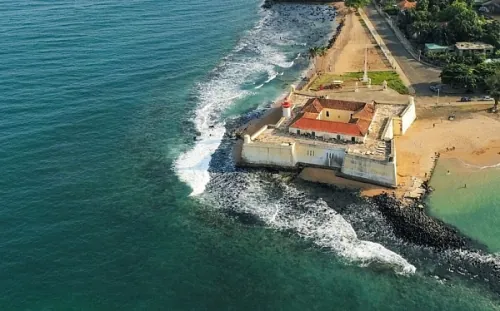
São Tomé and Príncipe only entered the citizenship-by-investment market in 2025, and by 2026 it had already begun adjusting its application rules.
The program's basic logic has not changed. Citizenship is granted through an irrevocable contribution to a state fund, with no requirement to live in the country, sit an exam, or attend an interview. Review typically takes around 6 weeks, and the full path from preparing documents to receiving a passport usually fits within 2-3 months.
The program is of interest primarily to those looking for a fast way to obtain a second passport for their family, a backup legal status, and a working tool for international asset structuring and immigration planning. That said, by 2026 what matters is no longer just the contribution amount and processing time, but also the details: which application form is used, who can be added to the application, and which confirmations must now be attached.
Key Changes in 2026
The main change: from February 16, 2026, only application forms of version V1/2026 are accepted. Old forms are no longer reviewed. For an investor, this means something simple: even with a fully assembled document package, the filing can be stopped if the application is completed on an outdated form.
The second notable change concerns proof of address. The Proof of Address document must now be issued no earlier than 6 months before filing the application and must include the applicant's full name and full address. If the housing is not registered to the applicant, additional explanations or confirmation from the owner must be attached.
The third change relates to family composition. The 2026 updates specifically state that, alongside the investor, not only a spouse but also a partner can be declared, provided there are documents confirming cohabitation and shared financial obligations.
Confirmations typically used for this include:
- a joint bank account;
- documents for jointly owned property;
- utility bills;
- a birth certificate for a shared child.
The fourth block of changes concerns children and family additions after filing. In 2026, the program's guidance separately confirmed that a child born after the application is filed, but before it is approved, can be added to it. After that, the family composition can also be expanded, but with additional payments.
The fifth point is a clarification of the rules for applications involving a sponsor. If the funds are contributed not by the investor themselves but by a third party, the sponsor is now required to provide a separate set of documents:
- proof of identity;
- confirmation of the source of funds;
- a bank letter;
- a certificate confirming no criminal record;
- proof of address;
- a declaration of financial support.
The technical requirements for photographs have also been simplified. Notarization of photographs is no longer required - a good-quality digital file is enough. On its own this is a small change, but it removes some unnecessary formality from preparing the file.
In terms of price, the program remains one of the most affordable on the market. Obtaining a passport requires $90,000 for a single applicant, $95,000 for a family of up to 4 people, plus $5,000 for each additional dependent. Separate fees apply for the administrative filing fee, as well as for issuing the passport, ID card and certificate of citizenship. Different sources on the market break down the additional fees differently, so the final calculation is worth double-checking before filing.
What Does This Mean for an Investor?
For an investor, the new rules mean the program has not become more complex in substance, but has become stricter on paperwork. Where previously attention focused mainly on the contribution amount and approval timeline, in 2026 the version of the application form, proof of address, and correctly prepared documents for dependent family members have become equally important.
The good news is that the core advantages remain in place:
- the program is still fully remote;
- there is no need to visit the country to file the application;
- the same list of eligible family members can be included in the application;
- the program remains available to citizens of Russia and Belarus;
- a new option has been added to include a civil partner in the application without a formal marriage.
The main applicant must be over 18, pass a background check, and confirm the legal origin of funds. The application can include a spouse or partner, children up to age 30 if financially dependent, and parents over 55 if they meet the program's conditions.
The practical value of a São Tomé and Príncipe passport is not limited to visa-free access to major jurisdictions. The passport provides limited but useful international mobility:
- 64 countries can be visited visa-free;
- a multiple-entry visa can be obtained for trips to Schengen, the United Kingdom or the US.
It is important to understand that this investment program is fairly new. That means the terms may still change. So it matters for the investor not just to gather documents, but to structure the filing so that it matches the current version of the requirements, rather than an overview read a few months ago.
Step-by-Step Guide
First, you need to check whether the applicant meets the basic criteria. The investor must have no background-check issues, must be an adult, and must have a verifiable source of funds. At this same stage, the family composition is determined: who is included in the application right away, who needs to be confirmed as financially dependent, and for whom additional documents will be required.
Next, the main document package is assembled. It usually includes:
- passport;
- birth certificate;
- certificate confirming no criminal record;
- proof of address;
- proof of source of income;
- bank statements showing the movement of funds.
If family members are included in the application, documents proving the relationship and financial dependence must be added to the main package. If a sponsor is involved, a separate set of documents is prepared for them too.
After that, the documents are translated into English or Portuguese and apostilled.
The next step is submitting the application through a licensed agent and paying the administrative fee. After filing, the file goes through a background check. Only after preliminary approval does the investor make the main irrevocable contribution to the state fund. This is one of the program's strong points: the main sum is transferred not at the start, but after a positive decision on the application.
Once the funds are credited, the passport, ID card and certificate of citizenship are issued. Documents can be delivered by courier, and personal presence in the country is not required. For an adult applicant, the passport is typically valid for 7 years; for children, it is valid for a shorter period, after which it is renewed under the standard procedure.
The whole process takes around 2-4 months. There is no need to travel to the country - everything can be done remotely.
Conclusion
In 2026, the São Tomé and Príncipe citizenship program remains one of the most accessible in terms of entry cost and one of the fastest in terms of timeline, but the filing has become more demanding on the details. What matters now is not only the contribution and background check, but also technical precision: current forms, a correctly formatted address, correctly included family members, and a complete document package.
For an investor, this is a good working tool if what is needed is a second passport with no travel, remote filing, and the ability to include family.
If you are considering São Tomé and Príncipe citizenship and want to go through the procedure without mistakes, reach out to our company's specialists for help.
Program São Tomé and Príncipe Citizenship →Questions about this article?
We'll look at your situation and suggest the next step.